



Fix That Uneven Fade — Fast
Feeling stressed about a patchy fade? This quick guide helps you diagnose the trouble, streamline corrections, and restore clean lines fast. Follow five practical steps—assess, prep, remove bulk, refine, and polish—so you leave satisfied, confident, and on schedule every time.
What You'll Need

Assess the Problem Zone
Don’t guess — inspect. Where’s the drop-off and why is it uneven?Start by getting a clear read: use bright, natural or overhead lighting and hold a hand mirror so you can see the back and sides. Tilt your head, move slowly, and inspect the fade from every angle.
Identify exactly what’s wrong. Look for areas that are higher, lower, patchy, or too sharp. Ask yourself if the problem is:
Use concrete examples: maybe the right temple sits half a guard longer, or there’s a bright line across the nape where the clipper skipped. Mentally mark problem spots or lightly mark them with a comb, washable chalk, or a paint-stick to plan fixes without overcutting.
Plan your approach: note which areas need blending, which need bulk removed, and which only need softening — this focused map keeps corrections precise and prevents accidental overcutting.
Prep the Area and Hair
Clean canvas, better results — think of it as priming a painting.Lightly dampen the hair or leave it dry depending on the original cut — keep shorter fades dry for the most accurate blending (example: a 1/8″ skin-to-1/2″ fade reads better dry).
Comb the hair into its natural fall and check how it lays. Remove product buildup with a quick spray of water or a tiny amount of cleanser if waxy pomade is present.
Drape a towel or cape around the shoulders to collect trimmed hair and keep the workspace tidy.
Position the client (or yourself) upright with the neck relaxed and chin level; ask them to sit still and breathe normally.
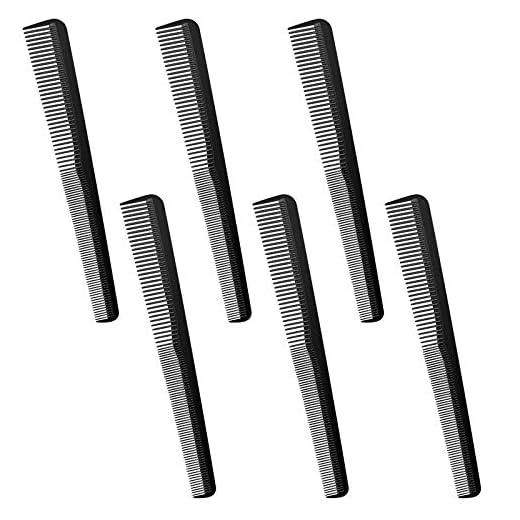
Choose a clipper guard one size shorter than the perceived high spots to safely remove bulk (if a spot looks like a #2, start with a #1). Have finer guards ready (+ fractional guards or a blending comb) for gradual work.
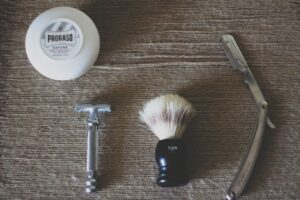
Gather tools:
Ensure your prep prevents surprises: you’ll cut only what’s necessary and reduce the chance of gaps while blending.

Remove Bulk Strategically
Lose the hair, not the shape — one smooth pass at a time.Use clippers with your chosen guard and work from the problem area outward in short, controlled strokes. Work against the grain to take hair evenly, then go with the grain to smooth the surface and check the blend.
Always focus on the higher, lumpy spots first — don’t plunge into the entire section. Avoid sweeping across everything; attack one bump at a time. Blend trouble spots by switching to a slightly shorter guard where the fade dips too heavily.
Feather the transition with a flicking motion at the clipper’s end (light wrist flicks as you lift) to soften hard lines. Perform frequent visual checks from multiple angles and use a hand mirror or step back to view the whole head.
Follow these quick rules:
If unsure, remove small amounts and re-evaluate — you can always trim more but you can’t add hair back.

Refine with Clippers, Trimmer & Scissors
Scissors aren’t just for length — they’re for finesse. Ready to nitpick?Use a trimmer with no guard (or a very light guard like a #0.5) to gently soften any hard line. Work in short, controlled passes and lift the blade slightly on the last few millimeters to feather rather than cut a new step.
Employ clipper-over-comb to blend mid-lengths: hold the comb so the teeth lift the longer hair, run the clipper over the comb edge and tip the comb to change graduation. Use scissor-over-comb for more subtle shaping—angle the comb and snip the exposed hair with the scissors.
Rotate your wrist and change the comb angle when you hit cowlicks or odd growth directions. Blend shorter into longer by moving the comb gradually higher on each pass.
Use point-cutting with scissors to break tiny islands or harsh edges—snip vertically into the tip of the hair rather than cutting straight across.
Finish the detailing with a straight razor or trimmer for crisp outlines, but only once the fade gradient reads smooth.

Polish, Check Symmetry, and Maintain
Tiny tweaks = huge difference. Want it mirror-perfect every time?Give a final once-over from multiple angles in natural light where possible. Inspect the fade from above, the sides, and with the head tilted—this reveals low spots and uneven graduation.
Use a hand mirror to compare both sides side-by-side. Stand behind the client (or look in a second mirror) and check that the hairline, blend points, and length transitions match left to right; adjust any low spots with short, guarded clipper passes.
Advise the client (or note for yourself): plan touch-ups every 2–4 weeks for short fades, 4–6 weeks for longer fades, and use daily styling (light product, finger-blending) to keep the blend looking seamless between visits.

You’re Done — Fast and Even
A calm assessment, targeted bulk removal, careful blending, and final polish make fixing an uneven fade quick and reliable; practice these steps to get faster and cleaner — try it, share your results, and keep improving consistently for reliable outcomes.



Tried it today — worked faster than I expected. The symmetry checks at the end are clutch. One tiny gripe: my trimmer tugged a little on wet hair even after towel drying. Any advice?
Try drying the hair completely or using a drop of lightweight oil on the blades if they’re prone to tugging. Also make sure the blades are clean and sharp — dull blades are often the culprit.
Yep, seconding blade maintenance. I learned that the hard way — cheap clipper oil fixed it instantly for me.
Great step-by-step — I actually tried this on my brother last weekend and the “Assess the Problem Zone” bit saved me. He had a weird patch near his ear and the clippers + scissors trick in step 4 fixed it quickly.
Only thing: I wish there were more pics for the “remove bulk strategically” part. I kept wondering how much to take off without making it look choppy.
Pics would help a ton. I also record short clips on my phone when I try something new — playing it back makes symmetry way easier.
Thanks Emily! Good call — we can add more close-up photos for the bulk removal section. Quick tip: take off less at first and blend gradually, that avoids choppiness.
Love the phone-record idea, Noah. We’ll mention that in the prep section as a quick hack.
Question: For curly hair, does the same method apply? My husband has tight curls and when I try clippers the fade looks weird.
I read the guide but wasn’t sure if we should detangle differently or use different guards.
Curly hair often needs more caution. Detangle gently, stretch curls with a comb while cutting, and use longer guards for the initial passes. You may also want to cut slightly drier to see the natural fall.
Also consider a texturizing shear for tough spots instead of heavy clippers — less chance of striping the curl pattern.
Humor time: I used the guide to fix my barber’s sad attempt after a night out. Felt like a clandestine operation but the ‘‘you’re done — fast and even’’ step made it look intentional. 😂
Serious note: practice steady wrist movement during blending. Small oscillation makes a big difference.
Glad you could rescue it! Love the steady wrist tip — it’s subtle but powerful. Thanks for the laugh too.
Steady wrist is cash. Also keep your elbow close to your body for more control.
Not gonna lie, step 3 made me nervous. “Remove Bulk Strategically” sounds like it requires surgeon-level precision 😂
But the method of using different guard lengths and working in small sections actually made it manageable. Took me about 25 minutes total.
Glad it felt approachable! The goal is speed without panic — small, confident passes beat big, fearful cuts.
Hah same — I felt like a hair surgeon but my roommate survived. Patience and comb control are everything.
25 minutes is a win. My first try took an hour lol. Practice speeds it up.
Okay real talk: I messed up the first time and made a tiny bald patch. Used the guide, slowed waaaaay down, and it helped but I still had to buzz the whole side to even it out.
So yeah — be ready to accept Plan B if your first pass goes south. Save yourself the optimism and have clippers set for full blend.
Been there. If you do have to buzz it down, embrace the fresh, clean look — it grows back quickly.
This. I keep a hat nearby for emergencies 😂 But practicing on a small section first helps avoid the big fixes.
Great realistic point, Mark. Always have a fallback plan and the right guard to blend down. Nobody has a perfect first try!
Loved the straightforward steps. One tiny edit suggestion: mention lighting in the prep section — natural light or a bright lamp makes symmetry checks way easier.
Also, random shoutout: the article’s tone is encouraging and not condescending, which is rare in DIY grooming guides. 👍
Thanks, Nina — lighting is a smart call. We’ll add that tip to section 2. Glad the tone landed well!
Agreed on lighting. I once cut half my eyebrow in dim light, never again.
Long comment incoming because I got obsessed with this and tried the method on three friends over the weekend:
1) Prep: took extra time to section and clip the bulk — big difference.
2) Remove bulk strategically: use a comb as a guide instead of eyeballing.
3) Refine: scissors over comb for texture at the top.
4) Polish: tiny adjustments, like one more pass with the trimmer, make it look pro.
Also, don’t rush the symmetry check — I kept flipping the mirrors until I saw tiny differences and fixed them. Worth it.
P.S. One friend fell asleep during the procedure so I had to deal with head twitches. 10/10 experience.
Head twitches are the worst lol. Great tips overall — I’ll try scissors-over-comb next time.
We’ll add a little section about keeping the client comfortable (snacks? pillows?) to help with movement.
Amazing run-through, Charlotte — this reads like a mini case study. Love the comb-as-guide reminder and the patience with symmetry checks.
Your long breakdown is perfect. Also, remind the sitter to keep chin slightly down for better neck fades.
Short and sweet: followed the guide, fixed an uneven fade that I’d been staring at for days. The ‘polish and check symmetry’ section felt like cheating — mirror trick + light touch = instant improvement.
Would love a quick video tutorial for the final blend though. Visuals help me more than words.
We’re working on a short video series — thanks for the nudge. The polish step is all about subtlety, which is why video will help.
Same — videos made me comfortable with clipper angles. Please upload one!
Noted — aiming for a 2–3 minute clip showing symmetry checks and the final scissor-over-comb polish.
I’m new to this and the multiple tool approach (clippers + trimmer + scissors) felt overwhelming at first. The guide’s sequence helped a lot though: bulk first, refine later.
My only suggestion: maybe a simple tool checklist at the top for newbies.
Great suggestion — a quick checklist is a good idea. We’ll add a printable mini-checklist for tools and blade guards.
Yes please, a checklist. Also include blade oil and a brush — saved me once when things got sticky.
Will include oil, brush, comb, mirrors, and guards. Thanks for the input!
Minor critique: the guide assumes access to a variety of guards and quality tools. For folks on a budget, maybe include a cheap-tools alternative or what to prioritize buying first.
Still super useful overall — I learned the importance of checking symmetry from multiple angles.
Noted — will include affordable brand suggestions and must-haves in the next update.
Excellent point — we can add a budget-friendly gear list and prioritize essentials (good clippers, one trimmer, pair of scissors, comb).
Agreed. If you can only buy one thing, get decent clippers. Everything else can be DIYed around it.
This guide is gold. A couple of notes from someone who’s clumsy with clippers:
1) Mark the strongest shadow (where fade should start) with a make-up pencil — comes off later.
2) Use a hand mirror to check the back; don’t trust touch alone.
Saved my Saturday and my pride.
Haha chalk = messy. Not recommended unless you want an abstract art statement.
Love the makeup pencil hack — smart and practical. Will add to the prep section. And yes, mirrors are underrated!
Good tips. I used chalk once and it smeared everywhere, so makeup pencil is better 😂